
Things to Do in Mullumbimby, Byron Bay: The Local Guide
From Cape Byron’s lighthouse and walking track to Minyon Falls, Brunswick Heads wildlife and hinterland gardens, here’s how to explore the region from Mullumbimby.
By Byron Bay Spots · 19 June 2026
# Things to Do Around Mullumbimby and Byron Bay: The Local Guide
Mullumbimby is a useful base for exploring the broader Northern Rivers, but the strongest outings in this guide spread across the coast and hinterland rather than sitting in one town. The list takes in Byron Bay’s headland, Brunswick Heads’ wildlife and marine experiences, rainforest lookouts, working farms and quieter coastal reserves. Some are easy scenic stops; others are better suited to a half-day walk or a dedicated hinterland outing.
Rather than treating the Byron area as one big checklist, choose the kind of day you want: a headland walk, a wildlife encounter, a waterfall view, a slow garden visit or a coastal drive south. These are the places that give the region its variety.
Byron Bay’s headland: lighthouse, lookouts and the eastern edge
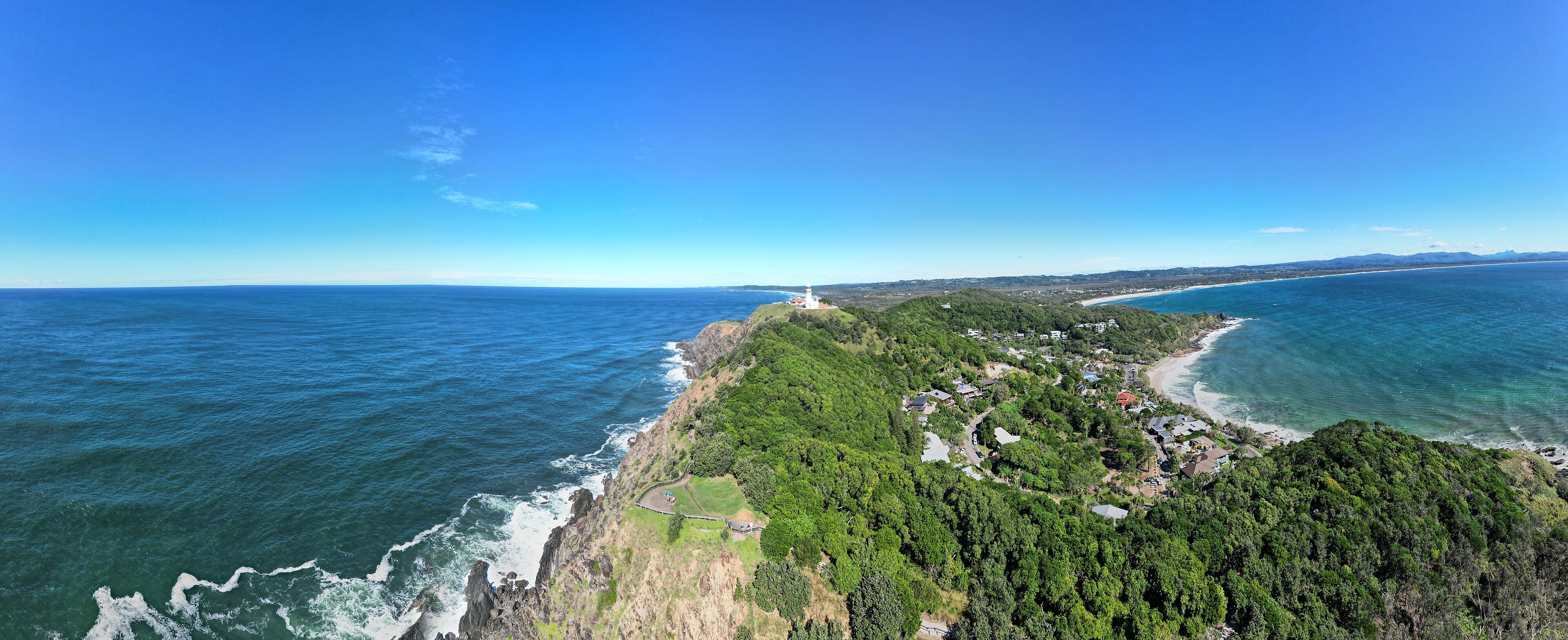
The most concentrated cluster of major sights is around Cape Byron. Walgun Cape Byron State Conservation Area protects the dramatic headland and the coastline around it, with beaches, cliffs, lookouts and rainforest connected by the famous walking track. It is worth visiting for the landscape itself, not just the landmark at the top: the reserve lets you see how the headland changes between coastal grassland, forest and open ocean views.
Within the conservation area, Cape Byron Lighthouse is the instantly recognisable stop. The historic white lighthouse sits above the Pacific on the most easterly headland of the Australian mainland, making it one of the area’s essential sights. Its appeal is the setting as much as the building: the surrounding headland delivers broad ocean views and a strong sense of place, especially if you approach on foot rather than treating the lighthouse as an isolated photo stop.
The Cape Byron Walking Track is the best way to join those elements together. The loop climbs from the beaches through rainforest and grassland, passing clifftop lookouts, coves and the lighthouse before returning around the headland. It is worth choosing when you want the full Cape Byron experience rather than a single viewpoint. The scenery changes constantly, and the track gives the easternmost point, beaches and lighthouse a useful context.
That precise landmark is the Most Easterly Point of the Australian Mainland, marked by a plaque on the Cape Byron headland. It is reached via the walking track and is worth the stop for the simple geographical fact: this is the point where the mainland reaches furthest east into the Pacific. It is a small, defined destination within a much larger coastal outing, so it works best as one moment on the walk rather than the sole reason to visit the cape.
For something more relaxed and central, Apex Park sits beside Main Beach on Bay Street. Its grassy lawns, shady trees and picnic areas make it a practical place to pause between the beach and Byron Bay’s town centre. The park is worth including when you want the familiar Byron setting without committing to a longer walk: it puts you right by the sand while still offering a green, easy-going space to sit.
Wildlife and time on the water at Brunswick Heads
North of Byron Bay, Brunswick Heads offers two very different ways to experience the local environment. Wild Byron sits on Harbour Way and focuses on close, hands-on encounters with native animals. It is worth going for a wildlife experience that feels more direct and personal than simply spotting animals in the landscape, particularly if connecting with the region’s native wildlife is a priority. The relaxed setting and strong reputation make it a notable stop for visitors looking for something beyond beaches and lookouts.
For a marine experience, BLUE SEAFARIS also operates from Harbour Way. Its boat outings include whale watching, dolphin tours and other ocean adventures. The reason to choose it is straightforward: the water changes the scale of the Byron experience, taking you away from the shoreline to look for marine wildlife and see the coast from offshore. It is a good fit for a day when the activity matters as much as the destination, though the exact experience will depend on the tour you select.
These two Brunswick Heads venues work well as separate options rather than a forced itinerary. Choose Wild Byron for a land-based wildlife encounter; choose BLUE SEAFARIS when you want to be out on the ocean. Both keep the focus on the natural side of the Northern Rivers.
Quieter coastline south of Byron Bay
Broken Head Nature Reserve is the place to look for a wilder, less central stretch of coast. Just south of Byron Bay, the reserve protects headlands, secluded beaches, rainforest and walking tracks. It is worth the visit when Byron’s better-known beachfront feels too busy or too urbanised and you want a more natural coastal setting. The combination of rainforest and open shoreline gives the reserve more depth than a simple beach stop, while the walking tracks let you explore beyond the sand.
For a different coastal perspective, North Wall Ballina follows the mouth of the Richmond River near the lighthouse at East Ballina. The breakwall is worth visiting for the contrast between river and ocean: you can walk along the wall, watch boats moving through the river mouth, fish or simply take in the headland and water views. It is a particularly useful stop for visitors who enjoy working coastal landscapes as much as dramatic cliffs — the river traffic gives the scene a sense of movement.
Nearby, Ballina Head Lookout offers a higher, wider view across the ocean, coastline and Richmond River mouth. It is worth choosing when you want a straightforward scenic lookout with the chance to watch for marine life. Together, the lookout and North Wall give you two ways to read the same coastal area: one from above and one alongside the breakwall.
Waterfalls, rainforest and big hinterland views
The Byron hinterland is not just rolling green farmland. Minyon Falls Lookout sits in Nightcap National Park at Whian Whian and looks over a waterfall dropping around 100 metres from a sheer rhyolite cliff into the rainforest gorge below. It is worth the outing for the scale of the view: the accessible lookout delivers an immediate sense of the falls, cliff and dense forest without requiring the lookout itself to be a long walk.
For a broader mountain landscape, Pinnacle Walk & Lookout is in Border Ranges National Park. The walk leads through bushland to views over the ancient caldera landscape, rainforest and ranges. It is worth selecting when you want a proper hinterland outing with a destination at the end, rather than a quick roadside viewpoint. The reward is geological and expansive: the lookout opens out beyond the immediate forest to the layered landscape of the ranges.
Both places are about changing perspective. Minyon Falls is the dramatic vertical view of water and gorge; Pinnacle is the wide, elevated view across rainforest and ancient terrain. They suit visitors who want the Byron region’s inland character as well as its beaches.
Gardens, crystals and a farm-based food stop
At Montecollum, Crystal Castle & Shambhala Gardens combines large crystals and geodes with subtropical gardens, rainforest walks and spiritually themed installations. It is worth going because it is unlike the region’s more conventional natural attractions: the visit moves between cultivated gardens, forest and striking mineral displays. The result is a slower, more contemplative kind of outing, especially for anyone interested in gardens or unusual collections.
The Farm Byron Bay at Ewingsdale offers another distinctly hinterland experience. It is a working farm and food destination built around a paddock-to-plate approach, with Three Blue Ducks, a bakery and a produce store set across the farm grounds. It is worth visiting when you want to connect the scenery with what is grown, made and served locally. This is more than a café stop: the working-farm setting is central to the experience, giving the meal or bakery visit a clear sense of place.
Practical tips for planning your days
- Group stops by landscape. Cape Byron’s conservation area, lighthouse, walking track and easternmost point belong together; Broken Head is a separate coastal outing; Minyon Falls and Pinnacle are dedicated hinterland choices.
- Allow your energy to dictate the plan. A lookout, park or farm stop is easy to combine with other activities, while the Cape Byron Walking Track and Pinnacle Walk & Lookout are better treated as outings in their own right.
- Choose the right weather-dependent option. BLUE SEAFARIS is built around time on the water, while the headland and rainforest venues are primarily walking and viewing experiences. Check current conditions and operator details before setting out.
- Wear practical footwear for walking tracks and lookout approaches, and take care around cliffs, beaches and river mouths. The coastal scenery is a major part of the appeal, but it is not all flat or urban.
- If you are staying in Mullumbimby, think of this as a regional day-planning guide rather than a list confined to one suburb. Byron Bay, Brunswick Heads, Ewingsdale, Broken Head, Ballina and the hinterland each offer a different version of the Northern Rivers.
- Most importantly, leave room for the setting. The best outings here are not only about reaching a named attraction; they are about moving between rainforest, working farmland, river, beach and open Pacific.
Featured spots
More Byron Bay guides
 roundup
Byron Bay Nightlife: The Best Bars & Live Music
From free live music at Railway Friendly Bar to beachside drinks at Treehouse, here’s how to choose a Byron Bay night out.
Read guide →roundupFree Things to Do in Byron Bay
Byron Bay has long traded on its beaches, headlands and hinterland, and a good chunk of what makes the area special costs nothing to enjoy. From the coastal tracks around Walgun Ca
Read guide →roundupByron Bay With Kids: Family-Friendly Things to Do
From Main Beach parks and headland walks to rainforest waterfalls and a working farm, here are grounded family-friendly ways to explore Byron Bay.
Read guide →